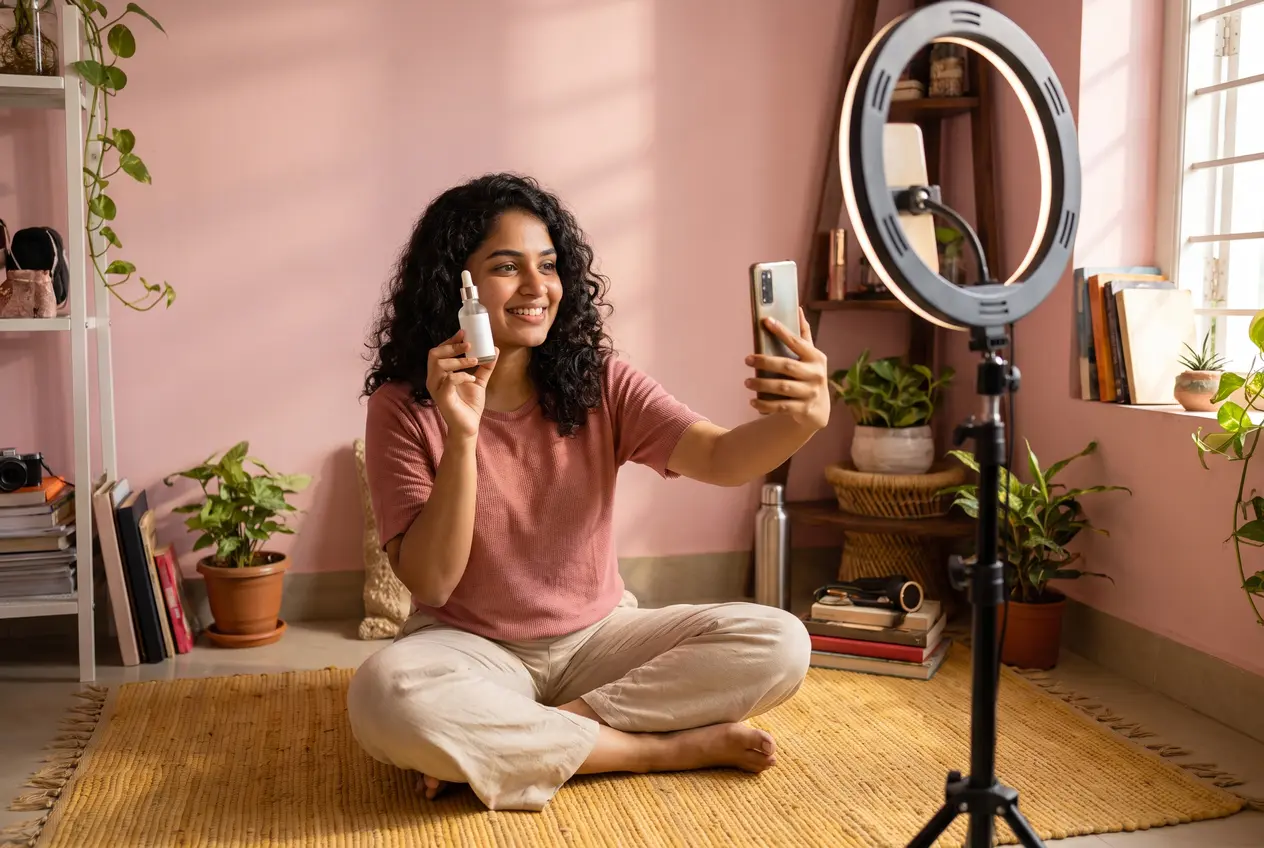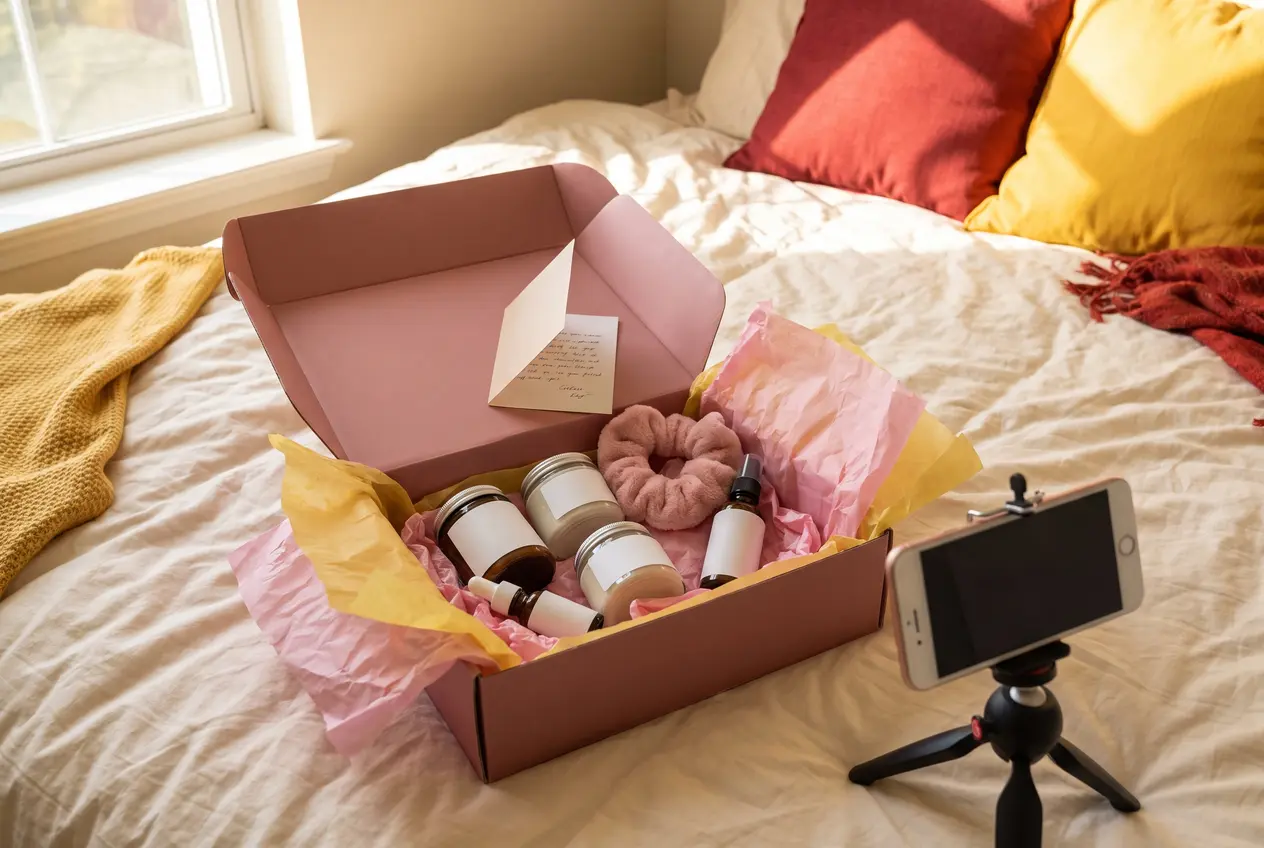
Most Indian D2C brands start influencer marketing the same way. You send a few parcels and hope someone posts. Now and then it works well. More often the creator goes quiet, or the reel turns up three weeks late and looks nothing like what you had in mind. In our experience that usually comes down to how the barter was set up, not luck.
Below we cover what a barter collaboration is, when it's worth doing, and how we set one up so the brand and the creator both know what they've signed up for.
What is a barter collaboration?
A barter collaboration is a deal where a creator receives your product (or service) instead of a cash fee, and in return creates agreed content about it, such as a reel, stories or a review. No money changes hands, but it is still a business arrangement with deliverables, dates and disclosure.
You'll also hear it called a "barter collab", a "product collab" or "gifting with deliverables". The last part matters. Pure gifting (sending product with no expectations) and a barter collaboration (product in exchange for specific content) are different things, and confusing them is where most disappointment starts.
Barter vs paid vs affiliate collaborations
Most brands end up using a mix of three models.
| Aspect | Barter collaboration | Paid collaboration | Affiliate / commission |
|---|---|---|---|
| What the creator gets | Product or service | A fixed fee (plus product) | A share of sales they drive |
| Best for | Seeding, early reviews, smaller creators | Launches, fixed dates, ad usage rights | Ongoing sales from creators with buying audiences |
| Control over timing | Low to medium | High | Low |
| Content usage rights | Rarely included unless agreed | Usually negotiated | Rarely included |
| Risk for the brand | Product cost, unreliable delivery | Fee paid even if content underperforms | Low cash risk, low priority for creators |
A sensible launch often uses all three: barter with a wider group of nano creators for early buzz, paid collaborations with a few creators whose dates you can't miss, and affiliate codes for creators who keep talking about you afterwards. We go deeper on sequencing in our influencer marketing strategy for product launches.
When barter works, and when it doesn't
Barter works when the product is worth the creator's time. A full skincare routine, a statement bag or a festive outfit is. A single sample sachet usually isn't.
It also helps if the creator already lives in your category. Someone who reviews serums every week will happily try yours; a travel creator probably won't. Keep the ask in proportion too. One reel or a set of stories is fair for a product. A reel, five stories, a YouTube video and exclusivity is not.
Timing is the other catch. Barter creators fit you in around their paid work, so don't build a launch date around them.
Where barter goes wrong is when the effort you ask for dwarfs the value of the product, when you need content by a fixed date, or when you want to run it as ads. In those cases we'd move to a paid collaboration. It's fairer to the creator and far more reliable for you.
How to find and pitch the right creators
Follower count is the least useful number on a creator's profile. When we shortlist, we look at four other things.
- Audience match. Ask for the audience breakdown by city, age and gender. A Delhi NCR clothing label needs followers in Indian metros, and a big chunk of followers abroad won't help it.
- Content style. Do their videos show products clearly? Do they talk to camera? For skincare brands we look for texture and routine shots; for cosmetics brands, swatches and wear tests.
- Comments. Questions like "Is this good for oily skin?" tell you the audience shops. A wall of fire emojis tells you much less.
- Past brand work. How did they handle earlier collaborations? Were they labelled? Did they feel like the creator's own content?
Keep the pitch short and specific. Say who you are and why you picked them, list the exact products and their value, and spell out what you'd like in return and by when. Creators get a lot of vague DMs, so a clear one gets read.
The written agreement: a checklist
Put every barter collaboration in writing. A short email or a shared doc is enough, as long as it covers the following.
- Deliverables: format (reel, stories, static post), number, and platform.
- Dates: when the product ships, when content goes live, and a buffer for delays.
- Key messages: two or three points to cover, not a script. Creators know their audience better than you do.
- Approvals: whether you see a draft before it goes live, and how quickly you'll respond.
- Usage rights: whether you can reshare the content, use it on your website or product pages, or run it as an ad, and for how long. Barter rarely includes ad rights by default, so ask upfront.
- Product terms: the creator keeps the product, or returns it (common for high-value jewellery or bags).
- Disclosure: how the collaboration will be labelled (see below).
- What happens if plans change: if the creator can't post, do they return the product?
If you want creator content you can use freely across ads and product pages without posting on the creator's handle, that's a different brief altogether: UGC content, where usage rights are the point of the deal.
Disclosure: barter still counts
A common myth is that barter doesn't need a label because no money was paid. In India, ASCI's guidelines for influencer advertising treat a product received for content as a material connection, so the post should be clearly labelled as an ad or collaboration (for example with a disclosure tag or the platform's paid-partnership label) where viewers will see it straight away.
The guidelines get updated, so check ASCI's current version before each campaign and write the disclosure requirement into your agreement. In our experience a clear label doesn't hurt good content at all.
A note on tax
Barter isn't invisible to the tax system either. Since 2022, India's income-tax rules have included provisions (section 194R) on benefits or perquisites given in the course of business, which can apply to products given to creators for promotion. How it applies depends on the value, whether the product is returned, and your business structure.
We're not tax advisers, so speak to your CA before running barter at scale, and keep a simple record of what you sent, to whom, and its value.
How to measure a barter collaboration
Barter still costs you product, shipping and your team's time, so we measure it like any other channel.
- Unique links with UTM tags for each creator, so website visits and orders show up in your analytics.
- Creator-specific discount codes, which also catch people who don't click a link.
- Saves, shares and comments, which tell you whether the content resonated even before sales show up.
- Content quality. Would you happily put it on your product page? Good barter content often ends up as your best social proof.
We keep one sheet per campaign with the creator, product sent, date live, link, code, results and a yes/no on working together again. After two or three rounds it's obvious which creators have earned a paid collaboration.
How a creator network makes barter easier
The hardest parts of barter are finding creators who fit, chasing timelines and keeping track of rights. At GrooveNexus Studios, we work with a network of creators and artists with good organic reach, and our core team picks collaborations that fit both the brand and the creator. We run barter, paid and mixed campaigns through our influencer marketing service, and we avoid the classic influencer marketing mistakes like vague briefs, missing disclosure and no usage rights.
FAQs
What does barter collaboration mean on Instagram?
It means a creator gets your product instead of a fee and, in return, posts agreed content about it on Instagram, such as a reel or stories. It should still be labelled as a collaboration.
Is a barter collaboration the same as gifting?
No. Gifting is sending a product with no obligation to post. A barter collaboration has agreed deliverables and dates in exchange for the product.
Do creators have to disclose barter collaborations?
Yes. In India, ASCI's influencer guidelines treat free products given for content as a material connection, so the post should carry a clear disclosure. Check ASCI's current guidelines for the exact requirements.
Can I use barter content in my ads?
Only if the creator agrees to it in writing. Barter rarely includes ad usage rights by default, so ask upfront and agree the duration. If ads are the main goal, a paid collaboration or UGC content is usually a better fit.
How many creators should I start with?
Start with a group small enough to follow up with properly, give each creator their own link and code, and add more once you know who delivers.
Want a barter or paid creator campaign that runs on time and is labelled properly? Explore our influencer marketing service or get in touch. We reply within 1 business day.