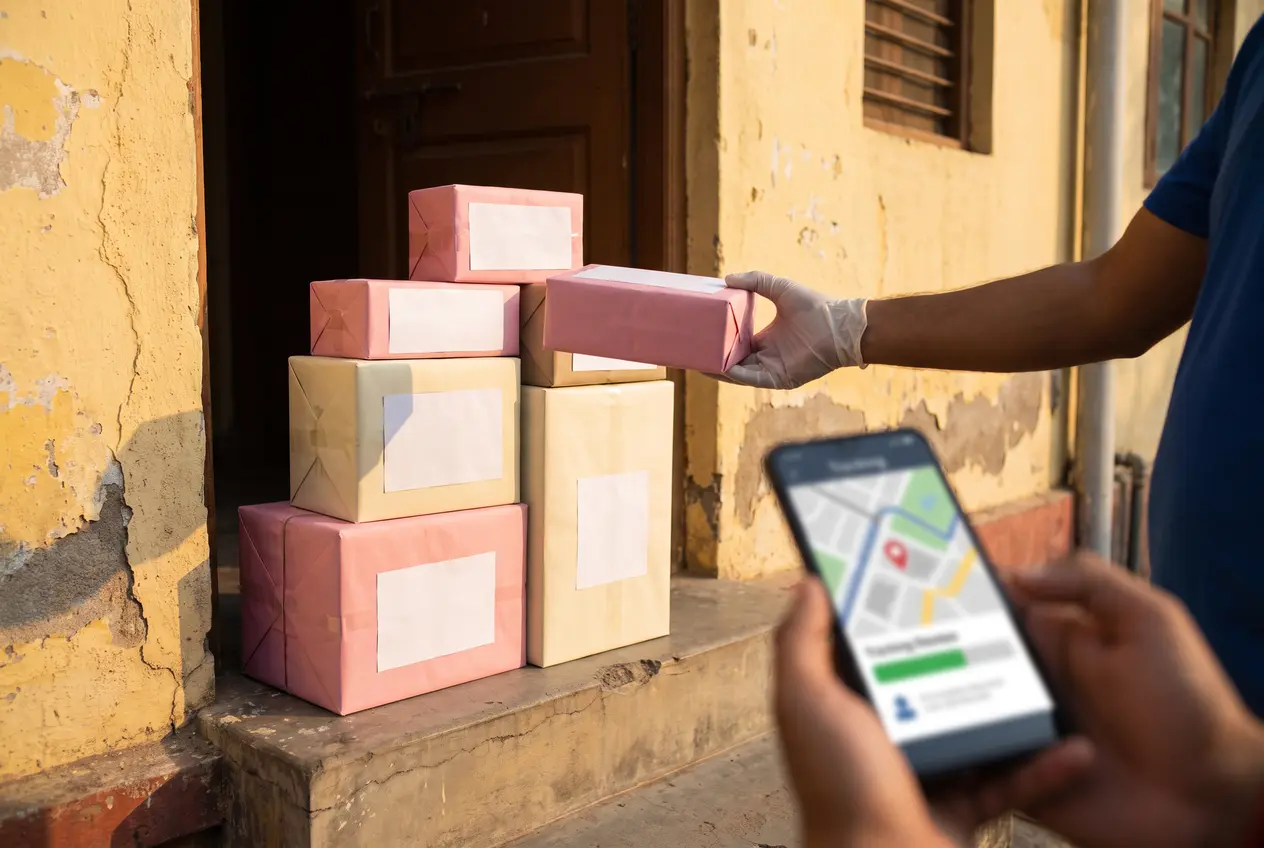
In ecommerce, RTO means return to origin. It's an order that never reaches the customer and gets shipped back to you, usually because someone refused it at the door, the address was wrong or the courier couldn't get through. In India it goes hand in hand with COD (cash on delivery), because a COD buyer hasn't paid anything and can just say no. You won't get RTO to zero, but you can bring it down a long way by working on it at each stage: the product page, checkout, the hours after the order, your ads and your data.
We don't tell brands to drop COD. Plenty of Indian shoppers, first-time buyers especially, won't try a new brand without it. What you want is to keep the reach COD gives you while filtering out the orders most likely to bounce.
RTO vs returns: two different problems
| Aspect | RTO (return to origin) | Customer return or exchange |
|---|---|---|
| What happens | The order is never delivered and goes back to you | The customer receives it, then sends it back |
| Typical causes | Refused at the door, wrong address, unreachable customer, delivery delays | Wrong size or shade, didn't like it, damaged, not as described |
| Who triggers it | Usually the buyer's change of mind before delivery, or a delivery failure | The buyer, after using or seeing the product |
| Main fix | Checkout and post-order confirmation | Product page clarity and quality |
Both cost money, but the fixes are different. This post is mostly about RTO.
Why RTO hurts more than it looks
An RTO costs you money even though nothing was sold.
- Forward and reverse shipping. You usually pay to send the parcel and again to get it back.
- Blocked inventory. Stock sits in transit for days or weeks and can't be sold.
- Packaging and handling. Boxes, inserts and packing time are lost.
- Damaged goods. Some parcels come back crushed, opened or unsellable.
- Wasted ad spend. You paid to get that order. If your ad platform counts it as a purchase, your reported return on ad spend looks better than it is.
That last one catches a lot of brands out. When you work out return on ad spend, use delivered revenue rather than placed orders. Our post on ROAS, break-even ROAS and Indian adjustments like COD and RTO shows how.
Common causes of RTO
- Impulse COD orders. They take ten seconds to place and nothing to refuse.
- Wrong or incomplete addresses. Missing landmarks, flat numbers or PIN codes.
- Delivery delays. The longer it takes, the more likely the buyer changes their mind or buys elsewhere.
- Fake or prank orders. Not many, but the same numbers and addresses tend to come back.
- Buyer's remorse. They saw something cheaper, or talked themselves out of it.
- Unclear expectations. If they aren't sure about size, fit or shade, buyers pick COD as a hedge and refuse when the doubt wins.
Layer 1: Before purchase
A buyer who knows exactly what they're getting rarely refuses the parcel.
- A clear product page. Proper photos, a short video, a description that matches the product, and the price shown with GST included. If your store converts poorly overall, start with our checklist for a Shopify store with no sales.
- Size and shade guides. For clothing brands, size charts with measurements in centimetres and inches, plus fit notes ("runs small"), cut both refusals and returns. For cosmetics brands, shade guides on real skin tones do the same job.
- A delivery date by PIN code. "Delivered by Thursday" on the product page sets expectations and reduces refusals caused by delays.
- Reviews and UGC. Seeing customers and creators use the product answers the questions that would otherwise turn into a hedged COD order. See our guide to UGC for Indian brands.
Layer 2: At checkout
Checkout is usually where brands can move fastest, mostly with settings and apps on their existing Shopify or WooCommerce store. Still choosing a platform? Read Shopify vs WooCommerce for Indian D2C brands.
- Nudge buyers to prepay. A small prepaid discount or free shipping on prepaid orders shifts some buyers without removing COD. Test the size of the incentive against your margins.
- Partial COD or an advance. A small upfront payment by UPI, with the rest on delivery, filters out low-intent orders.
- A COD fee. A modest, clearly shown fee covers some of the cost and makes the choice deliberate. Show it before the final step, never as a surprise.
- Address validation. Ask for flat number, building, street and landmark as separate fields, and check the PIN code matches the city.
- PIN-code serviceability checks. Don't accept orders you can't deliver reliably.
- COD limits. Cap COD on high-value orders, or on PIN codes with a history of high RTO, and offer prepaid instead.
If you're budgeting for a new store, our guide to Shopify pricing in India covers what checkout and payment features cost.
Layer 3: After the order
The first few hours after an order is placed are when you can still stop an RTO.
- Order confirmation on WhatsApp, with a simple confirm or cancel option. A cancelled order before dispatch costs far less than an RTO. Only message customers who have agreed to hear from you on WhatsApp, and make opting out easy.
- Address confirmation. If an address looks incomplete, ask before dispatch, not after the first failed attempt.
- Proactive tracking updates. Dispatch, out-for-delivery and delay messages keep the order front of mind.
- NDR follow-up within a day. When the courier raises a non-delivery report (customer unreachable, address issue, refused), contact the customer quickly and arrange a re-attempt or correct the address.
Layer 4: Ads
- Optimise and report on delivered revenue. If your ads are trained on every placed order, including the ones that come back, they'll keep finding buyers who refuse. Where you can, send back delivered or prepaid purchase signals and judge campaigns on them. Our performance marketing work sets reporting up this way.
- Look at RTO by campaign and creative. Some audiences or offers attract impulse COD buyers. A "free gift" hook might bring cheap orders and expensive RTO.
- Exclude repeat refusers carefully. Excluding customers who have refused several orders can help, but only with data you're allowed to use, and in line with your privacy policy and consent.
Layer 5: Data
We track RTO rate along these lines.
- PIN code and city, to set COD limits where they're needed
- Channel: ads, organic, influencer, marketplace
- Campaign and creative
- Product and size or shade
- Payment method: COD, prepaid, partial COD
Look at it once a month. Once it's all in one sheet, the problem PIN codes and campaigns are usually obvious.
What not to do
- Don't switch COD off overnight. Removing COD can cut RTO and orders at the same time. Test changes on a share of traffic or a set of PIN codes first.
- Don't use dark patterns. Hidden COD fees, pre-ticked add-ons or making cancellation hard all damage trust and can lead to complaints.
- Don't blame couriers for everything. Some RTO is down to delivery, but a lot of it starts on your product page and at checkout.
If you're still building the foundations of your brand, our guide to D2C marketing in India puts COD and RTO in the wider picture.
FAQs
What is RTO in ecommerce?
RTO means return to origin: an order that isn't delivered and is shipped back to the seller, usually because the customer refused it, couldn't be reached or the address was wrong. It's different from a customer return, where the product was delivered first.
Should D2C brands in India offer COD?
Usually yes, at least at the start. Many shoppers won't try a new brand without it. The aim is to keep COD and reduce its risk with prepaid nudges, partial COD, order confirmation and limits on high-risk orders.
What's the difference between COD and prepaid orders?
With COD, the customer pays when the parcel arrives. With prepaid, they pay online at checkout by UPI, card, net banking or wallet. Prepaid orders are less likely to be refused, which is why many brands offer a small incentive to prepay.
How do I reduce RTO quickly?
Start with WhatsApp order confirmation (with consent), address validation at checkout, and a small prepaid incentive. Then track RTO by PIN code and campaign to find where the problem is concentrated.
Does RTO affect my ad performance?
Yes. If your ads count every placed order as a sale, they'll look more profitable than they are, and they'll keep finding buyers likely to refuse. Judge campaigns on delivered revenue.
If your checkout needs prepaid nudges, better address fields and order confirmation built in, our Shopify development team can help. Get in touch and we'll reply within 1 business day.