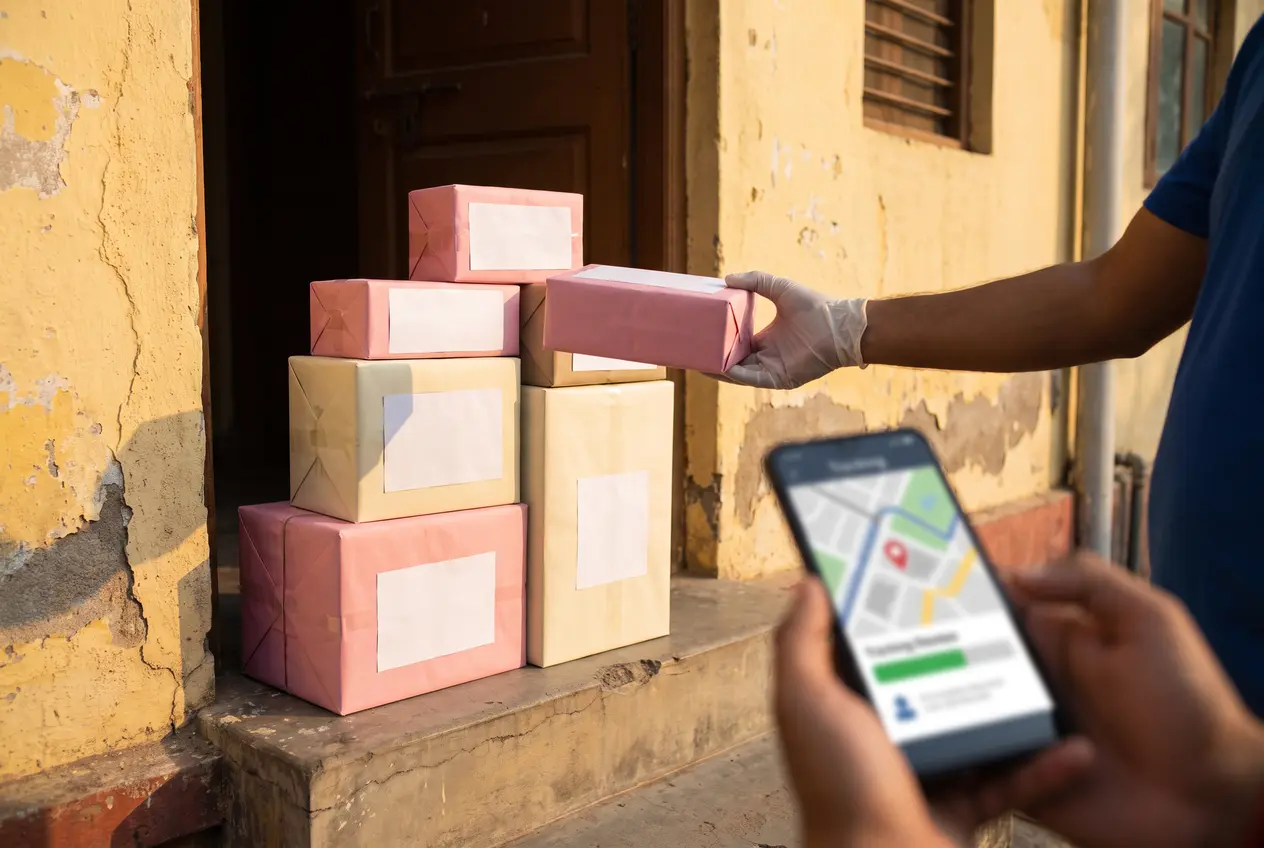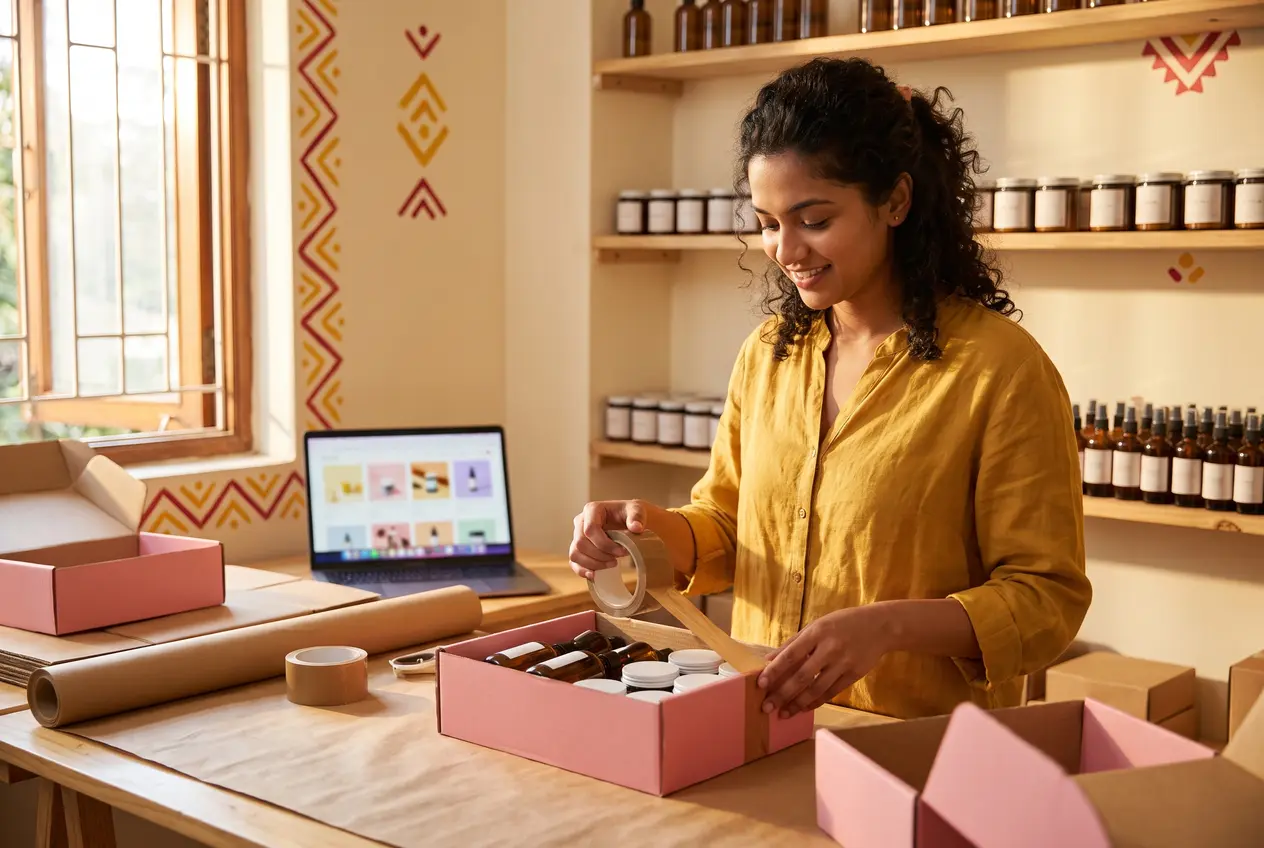
D2C (direct-to-consumer) means a brand sells straight to its customers through channels it owns, such as its own website, social media, WhatsApp or its own stores, instead of selling only through distributors, retailers or marketplaces. The brand controls the product, price, customer experience and customer data.
That's the definition. Making it work in India takes more. You keep the margin and the customer data, but you also take on everything a distributor or marketplace used to do for you, from getting noticed and converting visitors to shipping, COD, returns and repeat orders. Below we go through how D2C marketing works in 2026, stage by stage, and finish with the 90-day plan we'd use for a new store. If you'd rather build it with a team, see our services for D2C brands.
What is D2C? D2C vs B2C vs marketplace
The three get mixed up a lot.
| Aspect | D2C | B2C (traditional) | Marketplace selling |
|---|---|---|---|
| Who sells to the customer | The brand, directly | Retailers and distributors | The marketplace, on the brand's behalf |
| Who owns the customer data | The brand | Mostly the retailer | Mostly the marketplace |
| Margin | Highest per order, before marketing costs | Lower; split across the chain | Lower; commissions and fees |
| Who pays to get attention | The brand | Shared with retail | The brand (ads inside the marketplace) |
| Control over price and experience | Full | Limited | Limited by marketplace rules |
D2C is really a kind of B2C, just without the middle layer. Most D2C brands in India still sell on marketplaces too, which we cover below.
Why brands go D2C in India
The first reason is margin. There's no distributor or retailer taking a cut, and that money is what pays for ads, creators and content.
Then there's the data. You know who bought what, and (with their consent) you can reach them again on WhatsApp or email instead of paying to find them a second time. You also get to decide how the brand looks and feels, from product photos and pricing to the unboxing.
And you can move fast. A new shade, size or bundle can go live on your own site in a couple of days, and you'll know within a week or two whether it sells.
The honest trade-offs
This is the part founders tend to underestimate.
- You pay for every customer. Attention costs money, through ads, creators or time spent on content. Our ROAS guide shows how to check whether that spend pays back after margin.
- Logistics and payments are yours. Shipping partners, packaging, payment gateway fees and GST invoices all land on your desk.
- COD and RTO. Cash on delivery is still common in India, and returned-to-origin orders eat margin quietly. Our guide to COD and RTO for D2C brands goes through the fixes.
- The store has to convert. Traffic to a weak store is wasted. If people visit and don't buy, start with our fixes for no sales on Shopify.
The D2C marketing stack, stage by stage
We think of D2C marketing in five stages. When a brand skips one, the next one usually suffers.
1. Foundation: positioning, product content and the store
Before you spend on ads, sort out the following.
- Positioning. Who is this for, what problem does it solve, and why should they believe you? Our guide to building a brand identity for a D2C brand covers this.
- Product content. Clear product photos, close-ups, in-use shots and short videos. In skincare, cosmetics and jewellery, the content often decides the sale.
- The store. Fast on mobile, clear product pages, UPI and COD at checkout, honest delivery dates. Start with what a Shopify store really costs in India and whether Shopify or WooCommerce suits you, then see our Shopify development service.
2. Acquisition: getting the right people to the store
- Meta and Google Ads. The main paid channels for most D2C brands. Meta finds people who don't know you yet; Google captures people already searching. Tracking (Meta Pixel plus Conversions API) matters as much as targeting. See our performance marketing service.
- Creators and UGC. Creator content builds trust and doubles as ad creative. Start with what UGC is and how brands use it, then barter collaborations done right.
- Organic social and SEO. These are slower, but they keep building. A planned social media content calendar and helpful blog content keep you visible without paying for every click.
3. Conversion: turning visits into orders
- Product pages that answer questions: size, shade, ingredients, materials, delivery time, returns.
- Trust signals: real reviews, clear policies, a reachable support number or WhatsApp.
- Checkout without friction: UPI, cards, COD where it makes sense, no surprise shipping costs at the last step.
- Speed on mid-range Android phones on mobile data, which is how many of your customers shop.
4. Retention: bringing customers back
- WhatsApp for order updates, restock alerts and offers, only with consent.
- Email for launches, routines, care guides and loyalty.
- Community, such as creator collaborations, customer content and early access, so customers feel part of the brand.
This is where the D2C maths starts to work, because reaching someone who already bought from you costs far less than finding someone new.
5. Measurement: knowing what's working
Four numbers are enough to start with.
- ROAS (revenue from ads ÷ ad spend), checked against your break-even ROAS.
- CAC (cost to acquire a customer) compared with what that customer is worth over time.
- Contribution margin after product cost, shipping, payment fees, returns and marketing.
- Delivered revenue, not just orders placed, especially with COD.
A 90-day D2C marketing plan
This outline suits a brand launching or relaunching its own store.
Weeks 1–4: build the base
- Finalise positioning, pricing and the hero products to push first.
- Shoot product photos and short videos for the store, ads and social.
- Build or fix the store: product pages, checkout, payments, shipping, GST invoicing.
- Set up tracking: Meta Pixel, Conversions API and analytics.
Weeks 5–8: launch and learn
- Seed products to creators and collect early reviews and UGC.
- Start Meta Ads with several creatives and a modest budget, and test hooks and formats.
- Post consistently on Instagram with a monthly calendar.
- Check weekly where visitors drop off: product page, cart or checkout.
Weeks 9–12: double down
- Move budget to the creatives and audiences that pay back; pause the rest.
- Add Google Search and Shopping once there's demand to capture.
- Start retention: post-purchase WhatsApp and email flows, and reorder reminders.
- Plan the next quarter around India's festive and sale calendar.
Marketplaces and your own site, together
Most D2C brands in India sell on marketplaces as well as their own site, and we think that's sensible. Marketplaces bring shoppers who are already looking; your site builds margin, data and brand. A few rules keep the two from fighting each other.
- Keep pricing consistent so you don't undercut your own store.
- Use your site for launches, bundles and exclusives.
- Put a small insert in marketplace orders that invites customers to follow you or join WhatsApp updates, within each marketplace's rules.
Common D2C marketing mistakes
- Spending on ads before product content and the store are ready.
- Judging ads on platform ROAS without checking margin, returns and COD.
- Running the same two creatives until they stop working.
- Ignoring regional languages and cities beyond the metros.
- Planning Diwali, wedding season and end-of-season sales too late.
- Treating every customer as a one-time sale.
India-specific details to get right
- GST: issue proper GST invoices and decide whether prices shown are GST-inclusive (most Indian shoppers expect that).
- COD: offer it where it helps conversion, but nudge prepaid orders with clear benefits.
- Festive seasons: Diwali, Raksha Bandhan, Navratri, wedding season and regional festivals drive big demand spikes. Plan content and stock early.
- Regional languages: Hindi, Tamil, Telugu, Bengali, Marathi and other languages in ads and creator content can open markets that English alone misses.
FAQs
What is the meaning of D2C?
D2C stands for direct-to-consumer. A D2C brand sells directly to customers through its own website, social channels or stores, instead of only through distributors, retailers or marketplaces.
Is D2C the same as B2C?
Not exactly. B2C means selling to consumers through any route, including retailers. D2C is a type of B2C where the brand sells directly, without middlemen.
Can a D2C brand also sell on marketplaces?
Yes, and most do. The own website builds margin, data and brand, while marketplaces add reach. Keep pricing consistent across both.
What is the best marketing channel for a new D2C brand in India?
It depends on the product, but most brands we work with start with good product content, a store that converts, Meta Ads and creator content. Google, SEO and retention come in as they grow.
How long does it take for D2C marketing to work?
The first few months are mostly about learning which products, messages and creatives work. A clear 90-day plan with weekly reviews helps you learn faster without overspending.
Build your D2C brand with us
GrooveNexus Studios works with D2C brands across skincare, cosmetics, fashion and more, with a studio in Delhi and an office in Noida. One team handles your content, store, ads, creators and automation. Explore our services, or get in touch and we reply within 1 business day.